




Every lead, one workflow, zero lost patients.
Turn more referrals and inquiries into new clients with one intake workflow that replaces disconnected tools and lowers software costs.

%20scale(0.00128428)'%3e%3c/use%3e%3c/pattern%3e%3cimage%20id='image0_2008_324'%20width='854'%20height='857'%20preserveAspectRatio='none'%3e%3c/image%3e%3c/defs%3e%3crect%20width='57'%20height='623.02'%20transform='translate(1%201)'%20fill='white'%3e%3c/rect%3e%3crect%20width='57'%20height='623.02'%20transform='translate(1%201)'%20fill='%230B214B'%20fill-opacity='0.05'%3e%3c/rect%3e%3crect%20width='33'%20height='33'%20transform='matrix(-1%200%200%201%2046%2013)'%20fill='url(%23pattern0_2008_324)'%3e%3c/rect%3e%3cpath%20d='M11%2072C11%2068.6863%2013.6863%2066%2017%2066H42C45.3137%2066%2048%2068.6863%2048%2072V97C48%20100.314%2045.3137%20103%2042%20103H17C13.6863%20103%2011%20100.314%2011%2097V72Z'%20fill='%23E7E9EC'%3e%3c/path%3e%3cpath%20d='M36.1667%2084.5H32.1667L30.8333%2086.5H28.1667L26.8333%2084.5H22.8333M22.8333%2084.5L25.1333%2079.9067C25.2437%2079.6845%2025.4139%2079.4976%2025.6247%2079.3669C25.8355%2079.2361%2026.0786%2079.1668%2026.3267%2079.1667H32.6733C32.9214%2079.1668%2033.1645%2079.2361%2033.3753%2079.3669C33.5861%2079.4976%2033.7563%2079.6845%2033.8667%2079.9067L36.1667%2084.5V88.5C36.1667%2088.8536%2036.0262%2089.1928%2035.7761%2089.4428C35.5261%2089.6929%2035.187%2089.8333%2034.8333%2089.8333H24.1667C23.813%2089.8333%2023.4739%2089.6929%2023.2239%2089.4428C22.9738%2089.1928%2022.8333%2088.8536%2022.8333%2088.5V84.5Z'%20stroke='%230C141F'%20stroke-width='1.5'%20stroke-linecap='round'%20stroke-linejoin='round'%3e%3c/path%3e%3cpath%20d='M30.8333%20116.333V119C30.8333%20119.354%2030.9738%20119.693%2031.2239%20119.943C31.4739%20120.193%2031.813%20120.333%2032.1667%20120.333H34.8333M31.5%20116.333H25.5C25.1464%20116.333%2024.8072%20116.474%2024.5572%20116.724C24.3071%20116.974%2024.1667%20117.313%2024.1667%20117.667V128.333C24.1667%20128.687%2024.3071%20129.026%2024.5572%20129.276C24.8072%20129.526%2025.1464%20129.667%2025.5%20129.667H33.5C33.8536%20129.667%2034.1928%20129.526%2034.4428%20129.276C34.6929%20129.026%2034.8333%20128.687%2034.8333%20128.333V119.667L31.5%20116.333Z'%20stroke='%2353556C'%20stroke-width='1.5'%20stroke-linecap='round'%20stroke-linejoin='round'%3e%3c/path%3e%3cpath%20d='M28.8333%20159.667L22.8333%20157L36.1667%20152.333L31.5%20165.667L28.8333%20159.667ZM36.1667%20152.333L28.8333%20159.667'%20stroke='%2353556C'%20stroke-width='1.5'%20stroke-linecap='round'%20stroke-linejoin='round'%3e%3c/path%3e%3cpath%20d='M24.1667%20192.333V199.667C24.1667%20200.02%2024.3071%20200.359%2024.5572%20200.609C24.8072%20200.86%2025.1464%20201%2025.5%20201H33.5C33.8536%20201%2034.1928%20200.86%2034.4428%20200.609C34.6929%20200.359%2034.8333%20200.02%2034.8333%20199.667V192.333M27.8333%20198.333L31.1667%20195M27.8333%20195L31.1667%20198.333M23.5%20189H35.5C35.8682%20189%2036.1667%20189.298%2036.1667%20189.667V191.667C36.1667%20192.035%2035.8682%20192.333%2035.5%20192.333H23.5C23.1318%20192.333%2022.8333%20192.035%2022.8333%20191.667V189.667C22.8333%20189.298%2023.1318%20189%2023.5%20189Z'%20stroke='%2353556C'%20stroke-width='1.5'%20stroke-linecap='round'%20stroke-linejoin='round'%3e%3c/path%3e%3cpath%20d='M23.5%20227H35.5M34.1667%20227V236.333C34.1667%20237%2033.5%20237.667%2032.8333%20237.667H26.1667C25.5%20237.667%2024.8333%20237%2024.8333%20236.333V227M26.8333%20227V225.667C26.8333%20225%2027.5%20224.333%2028.1667%20224.333H30.8333C31.5%20224.333%2032.1667%20225%2032.1667%20225.667V227M28.1667%20230.333V234.333M30.8333%20230.333V234.333'%20stroke='%2353556C'%20stroke-width='1.5'%20stroke-linecap='round'%20stroke-linejoin='round'%3e%3c/path%3e%3c/svg%3e)
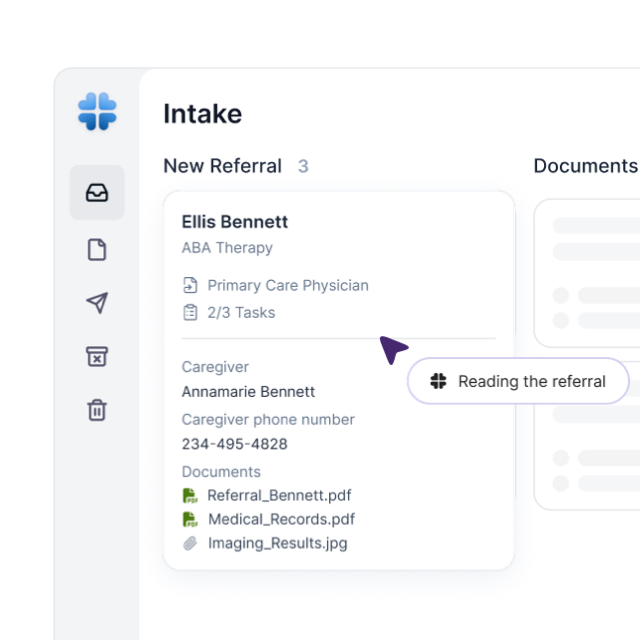
 Reading the referralDrafting a follow up to the caregiverFollow up sent to the caregiver
'%20d='M10.96%202.62568L20.6807%206.42945C26.2874%208.62335%2029.0907%209.72031%2028.9978%2011.4604C28.9048%2013.2004%2025.9792%2013.9983%2020.128%2015.5941L20.128%2015.5941C18.3858%2016.0692%2017.5147%2016.3068%2016.9108%2016.9108C16.3068%2017.5147%2016.0692%2018.3858%2015.5941%2020.128L15.5941%2020.128C13.9983%2025.9792%2013.2004%2028.9048%2011.4604%2028.9978C9.72031%2029.0907%208.62335%2026.2874%206.42945%2020.6807L2.62568%2010.96C0.328745%205.09005%20-0.819723%202.15508%200.667679%200.667679C2.15508%20-0.819723%205.09005%200.328745%2010.96%202.62568Z'%20fill='%23462870'%3e%3c/path%3e%3c/g%3e%3c/svg%3e)

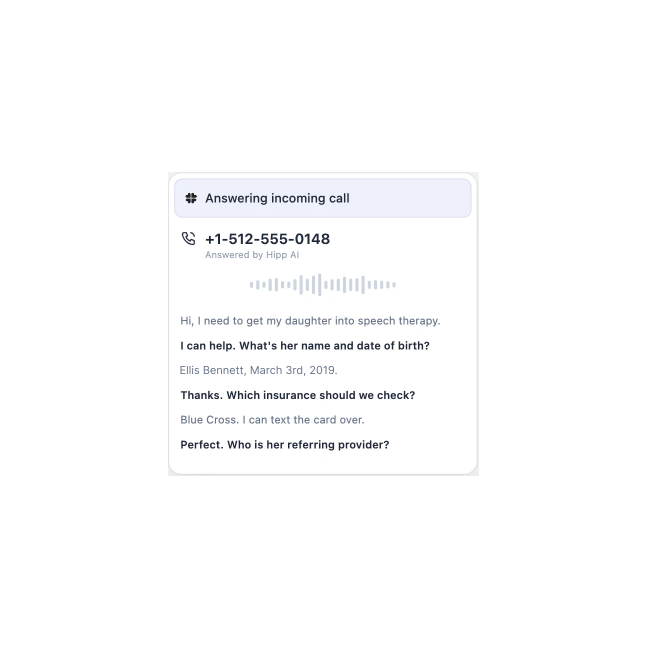
 AdmittingAnswering incoming call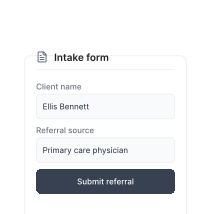
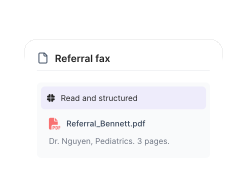
Order out of intake chaos, by agents that act rather than report
Save hours every week
No more manual document review or double data entry. Hipp Intake reads the paperwork and enters it for you.
Start care faster
Less time between first contact and the first session, because nothing sits waiting for a manual step in between.
Stay on top of it all
Every referral and lead gets tracked and moved forward automatically. Nothing goes missing or goes cold.
How Hipp Intake works
The Intake Agent handles everything from first contact to the start of care.
Captures every lead and incoming referral
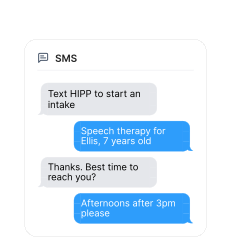
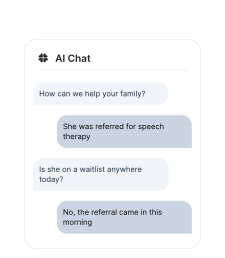
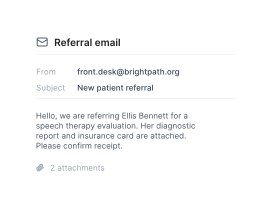
Referrals, leads, and documents arrive from multiple channels and land in a single queue. No inbox, no spreadsheet.
Collects intake forms
Sends and tracks the paperwork so nothing shows up incomplete on day one.
Checks eligibility in real time
Checks eligibility against the payer before anyone books a session.
Tracks prior authorization
See authorizations in one place. Know what's submitted, what's pending, what's approved without chasing status.
Schedules the first session
Finds the right clinician by availability and specialty, and gets the first visit on the calendar.

12 hrs
Saved per FTE per week
38%
Faster from first contact to first session
3x
Fewer dropped referrals and follow-ups
Put Hipp Intake to work alongside your EHR.
You don’t have to wait for your EHR contract to end to improve intake. Part of the Hipp platform, Hipp Intake is also available as a standalone integration with your existing EHR to help turn more referrals and leads into new clients.
Get in touchAgent-to-agent collaboration across the entire patient journey

Scheduling
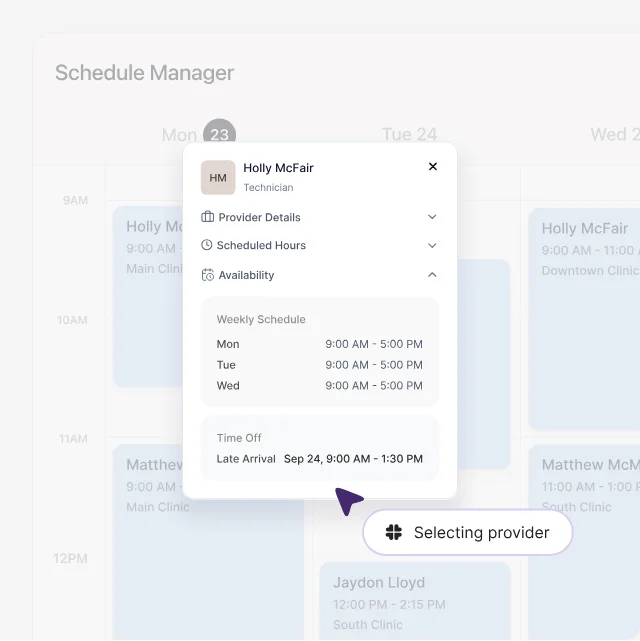
Your Intake Agent gets care on the calendar. Your Scheduling Agent keeps it moving, rebooking cancellations and filling openings with eligible clients.


Care
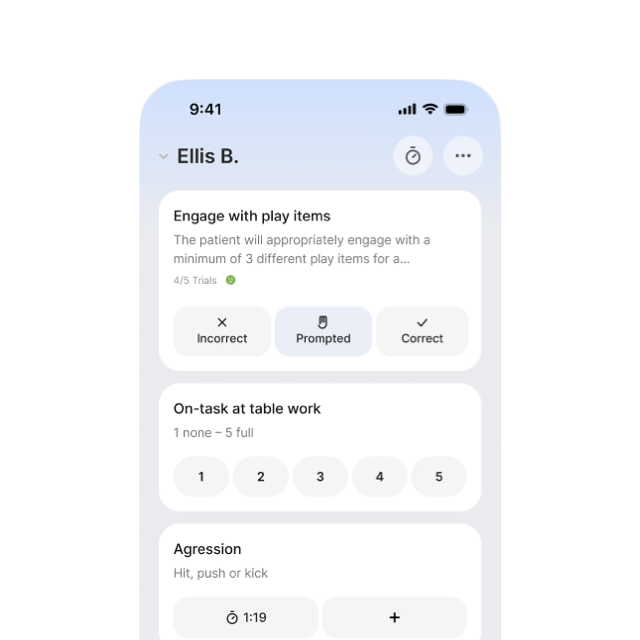
Picks up the note from a record that's already complete so nothing gets manually re-entered.

Billing
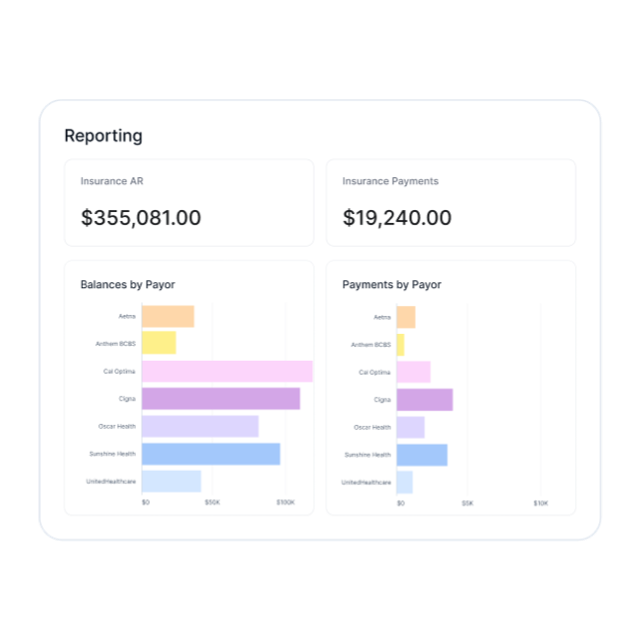
The authorization your Intake Agent secures becomes the claim your Billing Agent submits. One connected system from referral to reimbursement.

Compliance
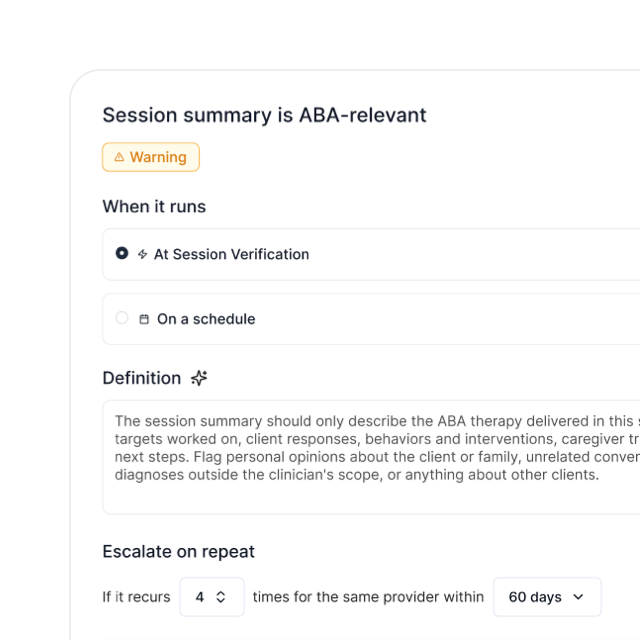
Your Compliance Agent turns information from intake and scheduling into ongoing oversight, tracking required documents, upcoming recertifications, and remaining authorized hours.
FAQs
What types of intake workflows does Hipp Intake support?
A strong intake workflow covers referral capture, insurance verification, prior authorization, and intake form collection — ideally in one system rather than several stitched together. Hipp Intake handles all four for ABA, speech, OT, and other ambulatory specialties, configured to each payer's and each practice's specific requirements.
Does Hipp Intake replace our existing EHR or system of record?
Not every intake tool requires replacing what's already in place — some are built to layer on top of an existing system instead. Hipp Intake is built this way, so larger practices can start automating referral intake without a full platform switch.
Can Hipp Intake work across multiple specialties?
The main risk with multi-specialty intake is running separate tools per line of business, which fragments the data model. Hipp Intake runs on the same ambulatory data model across ABA, speech, OT, and other specialties, so multi-service practices can standardize without separate tools for each one.
How quickly can teams get started?
Go-live timelines depend heavily on whether a tool requires a full data migration or can run alongside what's already in place. Because Hipp Intake layers on top of your existing system rather than replacing it, most teams are live within days, not months, with no data migration required.
Is patient data secure when Hipp Intake automates referral intake?
Referral data — demographics, insurance details, clinical documents — is protected health information from the moment it enters the system. Hipp encrypts it in transit and at rest, restricts access by role, and never exposes it to public AI training. Automation doesn't change the standard; it just means fewer people handle the data manually.

See what it's like when your practice stays ahead.
See what it's like
when your practice stays ahead.
